
The Summer Harvest Guide: When and How to Pick Everything at Peak
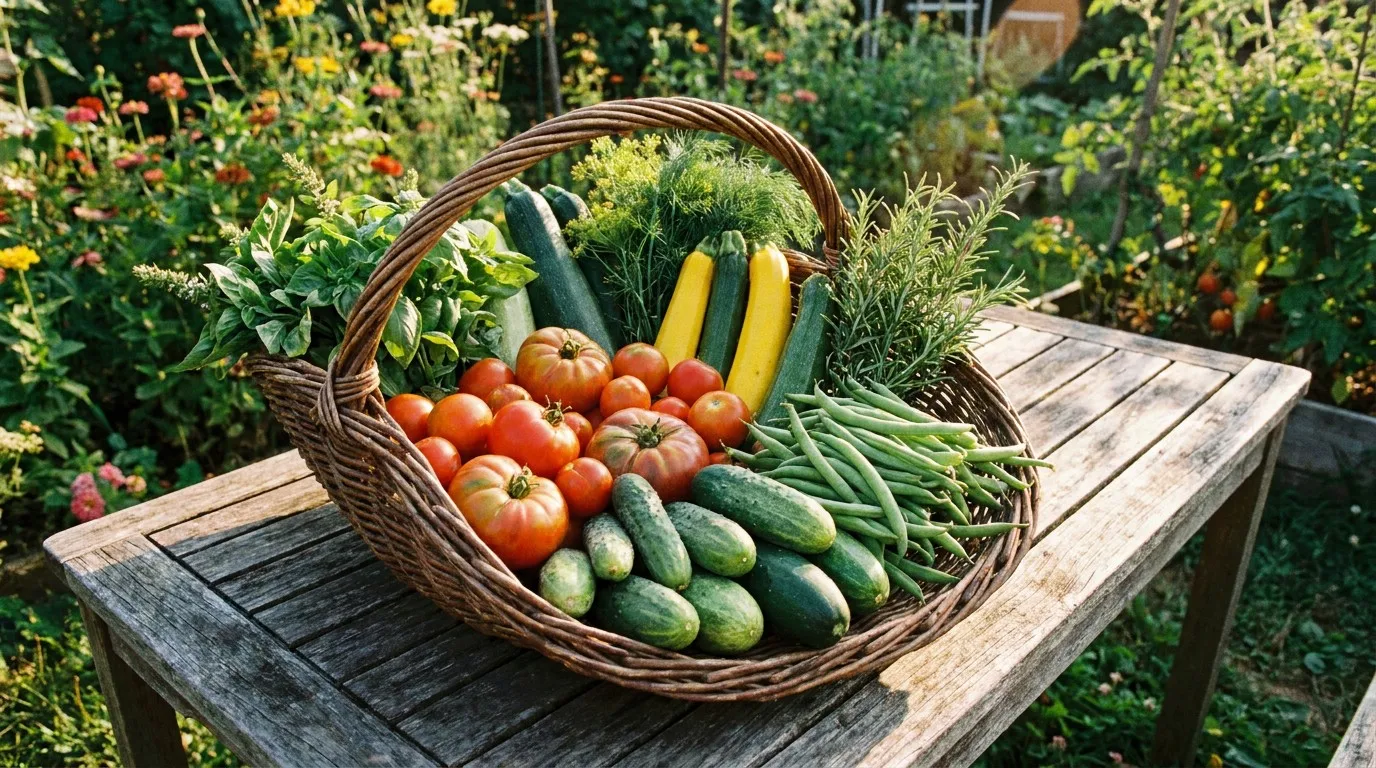
Knowing when to harvest is as important as knowing how to grow. Pick too early and you miss peak flavor. Pick too late and you signal the plant to stop producing. Harvest at exactly the right moment and you get the best the plant can offer — and you keep it producing all season long. Here's the complete summer harvest guide.
Tomatoes
When: Fully colored for the variety (red, yellow, orange, or purple) and slightly soft when gently squeezed. The fruit should detach with a slight twist — no pulling required.
How: Twist gently or cut with pruning scissors, leaving a short stem attached.
Key rule: If a frost threatens, pick all tomatoes (even green ones) and ripen indoors at room temperature. Never refrigerate tomatoes — cold destroys their flavor compounds permanently.
Cucumbers
When: Dark green, firm, and at the size specified for the variety (typically 6-8 inches for slicing types; 3-4 inches for pickling types). Yellow base indicates overripe — the skin becomes bitter and seeds enlarge.
How: Cut with a knife or scissors — never pull, which damages the vine and reduces future production.
Key rule: Check every 2 days in peak summer. An overlooked cucumber turns yellow almost overnight and signals the plant to stop producing.
Zucchini & Summer Squash
When: 6-8 inches long — this is when flavor and texture peak. At 12 inches, they become seedy and watery.
How: Cut with a sharp knife, leaving 1 inch of stem.
Key rule: Check daily. Zucchini can grow 2 inches per day in summer heat. One missed harvest creates a marrow; regular harvesting keeps production high for months.
Beans (French & Runner)
When: Pods are full-size but before seeds visibly bulge — snap them and they should break cleanly without strings.
How: Snap or snip — both work well.
Key rule: Harvest every 2-3 days. Allowing pods to mature and dry on the plant tells the plant its work is done — production stops immediately.
Herbs
Basil: Harvest before flowers appear. Cut stems just above a leaf node. Pinch flower buds off immediately when they appear — flowering causes leaves to turn bitter.
Mint: Cut stems back to 4 inches from the soil. This prevents woodiness and encourages fresh, flavorful growth.
Rosemary, thyme, sage: Harvest soft stem tips only — never cut into woody brown growth, which won't regenerate.
Lettuces & Salad Greens
When: Outer leaves reach 4-6 inches — harvest these while inner leaves continue growing.
How: Cut outer leaves at soil level, leaving the growing crown intact. A single plant can provide 8-10 harvests this way over several weeks.
Key rule: Harvest in the morning when leaves are turgid. Afternoon harvests produce wilted salad.
The Universal Harvesting Principle
For every vegetable: regular harvesting signals the plant to produce more flowers and fruit. Leaving mature produce on the plant signals it to slow down and focus energy on ripening seeds. The gardener who harvests every 2 days throughout summer will produce more than the gardener who harvests once a week.
Find precision harvest scissors and garden tools at vyrgromm.com.