
The Beginner's Guide to Composting: Turn Kitchen Scraps into Garden Gold
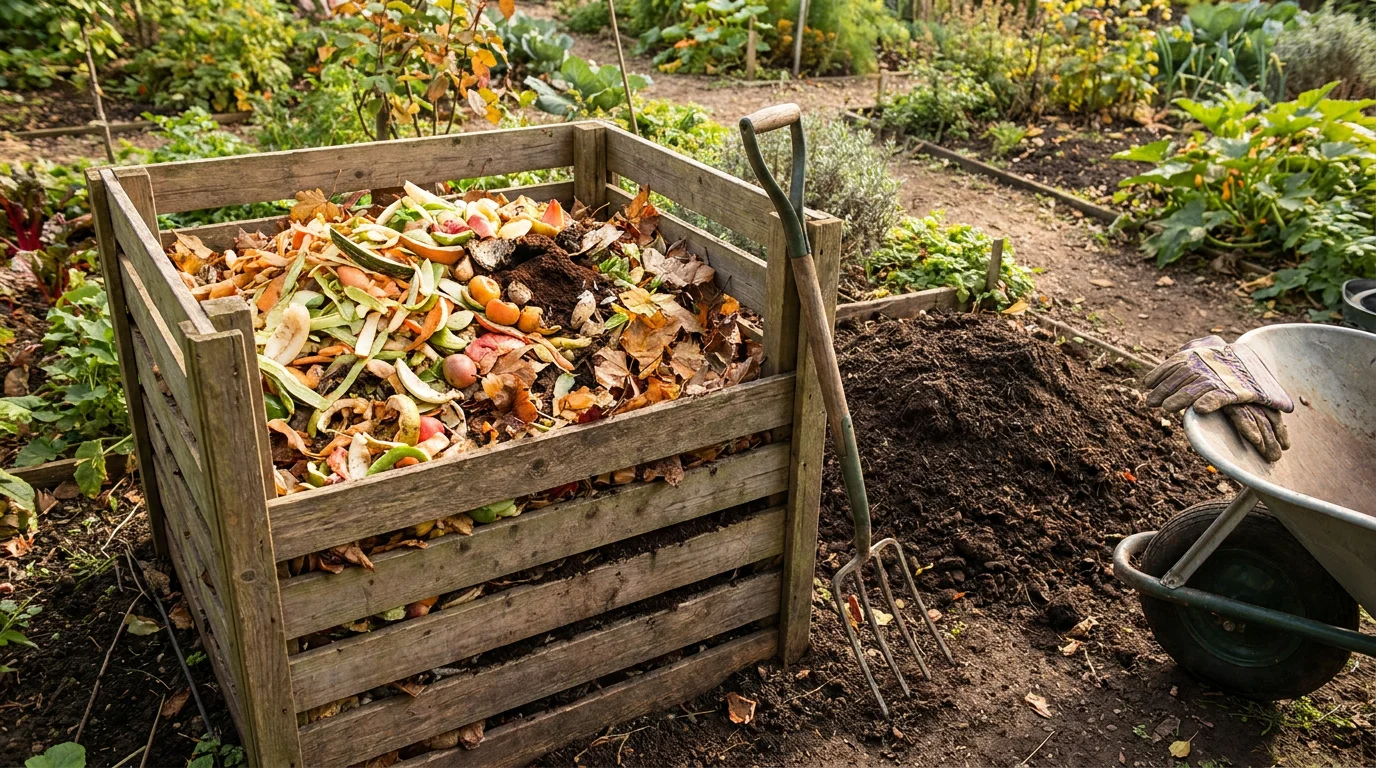
Composting is the closest thing gardening has to alchemy. Kitchen scraps and yard waste that would otherwise fill landfills are transformed — through the work of billions of microorganisms — into dark, crumbly, nutrient-rich compost that improves every type of soil. Better yet, it's almost entirely free and requires far less effort than most people assume.
What Is Compost, Exactly?
Compost is decomposed organic matter. When you pile together "greens" (nitrogen-rich materials) and "browns" (carbon-rich materials) in the right ratio, add moisture and occasional turning for air, microorganisms get to work breaking everything down. The result is a stable, humus-rich material that:
- Improves soil structure in both clay and sandy soils
- Feeds soil biology, which in turn feeds plants
- Increases water retention by up to 20% in sandy soils
- Suppresses certain soil-borne diseases
- Replaces the need for synthetic fertilizers in many garden applications
The Green/Brown Ratio: The Key to Fast Composting
The ideal carbon-to-nitrogen ratio for active composting is roughly 25–30 parts carbon (browns) to 1 part nitrogen (greens) by weight. In practice, this means roughly equal volumes of greens and browns, with slightly more browns.
Greens (nitrogen-rich):
- Fruit and vegetable scraps
- Coffee grounds and filters
- Fresh grass clippings
- Plant prunings and deadheading material
- Tea bags (remove staples)
Browns (carbon-rich):
- Dried leaves (the gold standard)
- Cardboard torn into small pieces
- Paper and newspaper (uncoated)
- Straw and hay
- Dried plant stems
- Wood chips or shredded bark
What NOT to Compost
- Meat, fish, dairy, and oily foods — attract pests and create odor
- Diseased plants — pathogens can survive composting and reinfect your garden
- Pet waste — carries pathogens
- Treated or painted wood — contains chemicals toxic to soil biology
- Invasive weeds that have gone to seed — seeds often survive composting
How to Start a Compost Pile
- Choose a location: A partly shaded spot is ideal — full sun dries the pile too fast; full shade slows decomposition. Easy access from the kitchen and garden saves time.
- Start with a brown base: Lay 4–6 inches of browns (dried leaves or cardboard) as the first layer to absorb moisture and allow airflow from below.
- Add greens and cover: Add kitchen scraps and other greens, then cover with another layer of browns. This layering reduces odor and balances the ratio.
- Keep it moist: The pile should feel like a wrung-out sponge. In dry weather, add water. In very wet weather, cover to prevent waterlogging.
- Turn regularly: Turning the pile weekly accelerates decomposition by introducing oxygen. Once a month is acceptable for slower "cold" composting.
How Long Does Composting Take?
Hot active composting with regular turning: 4–8 weeks
Cold passive composting with minimal intervention: 3–6 months
Finished compost is dark, crumbly, and smells like rich earth — not like rotting food.
How to Use Compost
- Top dressing: Spread 1–2 inches across the surface of existing beds each spring
- Soil amendment: Work 2–3 inches into new planting areas before planting
- Potting mix: Replace up to 30% of commercial potting mix with finished compost
- Compost tea: Steep compost in water for 24–48 hours for a diluted liquid fertilizer
Composting is the single best long-term investment you can make in your garden's soil health. Start small, stay consistent, and within a few months you'll have a self-renewing source of one of the most valuable materials in gardening.
Explore our soil and garden supply collection at vyrgromm.com.