
How to Water Your Garden Like a Pro: Timing, Technique & Tools
Overwatering kills more plants than drought does. It's the number one mistake home gardeners make — and it's almost entirely avoidable with the right knowledge and tools. This guide covers everything from when to water to which nozzle setting works best for each plant type.
When to Water: Timing Is Everything
Best time: Early morning (6–10 AM)
Water before the heat of the day. This gives leaves time to dry before evening, dramatically reducing fungal disease risk. The soil absorbs moisture slowly, and roots get a full drink before afternoon sun causes evaporation.
Acceptable: Evening (after 4 PM)
If morning watering isn't possible, evening is second best. The risk is that wet foliage overnight encourages mildew and mold — so aim water at the soil, not the leaves.
Avoid: Midday
Watering at peak sun causes up to 40% of water to evaporate before reaching roots. It also risks leaf scorch on some plants when water droplets act as magnifying lenses.
How Much Water Does Your Garden Actually Need?
Most vegetable gardens and flower beds need 1 inch of water per week, either from rainfall or irrigation. Here's a quick reference:
- Sandy soil: water more frequently (every 2–3 days) as it drains fast
- Clay soil: water less often but deeply, allowing it to drain between sessions
- Loamy soil: the ideal — water every 3–5 days in summer
- Container plants: check daily in summer heat; pots dry out 2–3× faster than ground soil
The Finger Test: The Simplest Moisture Check
Push your finger 2 inches into the soil. If it's dry at that depth, water now. If it's still moist, wait another day. No gadget required — just your hand.
Watering Technique: How You Water Matters
- Water deeply, not frequently: A long, deep soak once or twice a week is better than a shallow sprinkle daily. Deep watering encourages roots to grow downward, creating drought-resistant plants.
- Water the soil, not the leaves: Direct water at the base of plants. Wet foliage invites fungal disease.
- Slow and steady: Fast watering causes runoff before absorption. Use a gentle flow and give soil time to drink.
Choosing the Right Watering Tool
Watering wands
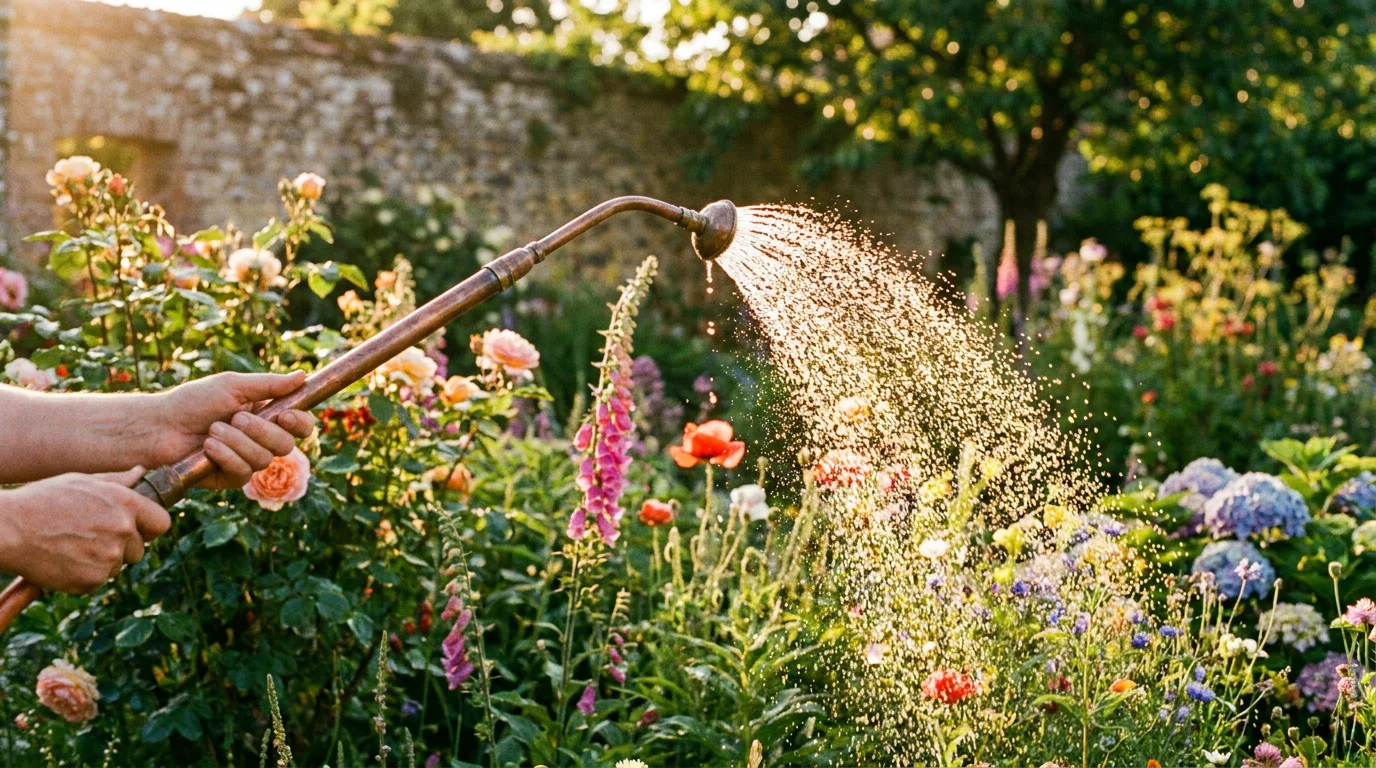
A telescopic watering wand with a 180° adjustable head is ideal for raised beds, hanging baskets, and containers. The extended reach means you water at the root level without bending or disturbing the plant. Our 360° Copper Telescopic Spray Wand features an adjustable flow pattern and rust-resistant copper head — designed for precision watering in any garden configuration.
Spray bottles
For seedlings, herbs, and indoor plants, a fine-mist spray bottle delivers water gently without disturbing delicate root systems or washing away seeds. Our Precision Tip Squeeze Watering Bottle is perfectly sized for windowsill gardens and propagation trays.
Soaker hoses & drip irrigation
The most efficient option for large vegetable gardens. Delivers water directly to root zones with minimal evaporation — up to 50% more efficient than sprinklers.
Signs You're Overwatering
- Yellowing lower leaves
- Mushy stems at the base
- Mold on soil surface
- Root rot (pull a plant — roots are brown and slimy, not white)
Signs You're Underwatering
- Wilting in the morning (not just midday heat wilting)
- Dry, cracked soil surface
- Crispy brown leaf edges
- Stunted growth
Master these principles and your plants will reward you with explosive growth all season. The right watering tool helps enormously — explore our watering collection at Vyrgromm to find the perfect fit for your garden.