
How to Harvest Herbs the Right Way (Without Killing the Plant)
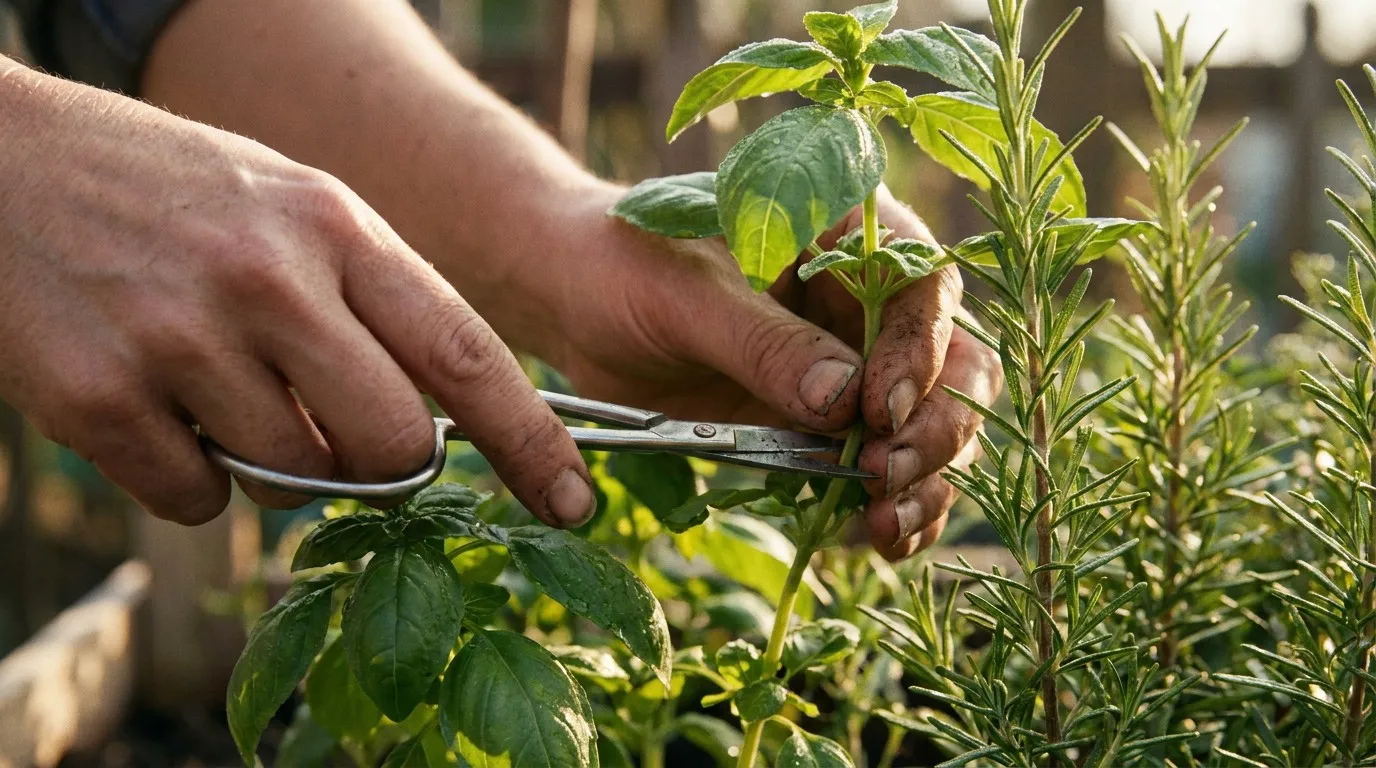
Growing herbs is satisfying. Harvesting them incorrectly is how most people accidentally destroy a thriving plant. The good news: once you understand how herbs grow, the right technique becomes obvious — and your plants will reward you with months of continuous production instead of one or two harvests before they give up.
The Golden Rule: Never Remove More Than One-Third
This applies to every herb, every time. Removing more than a third of a plant's foliage in a single harvest puts it into stress mode — it shifts energy from producing new growth to survival recovery. Take up to a third, and the plant responds by producing more growth to compensate. Take too much, and it sulks for weeks.
Basil: Pinch from the Top, Prevent Flowering
Basil is the most misunderstood herb in the garden. Most people pluck individual leaves from the bottom — wrong. Instead:
- Cut just above a pair of leaves, removing the top 4–6 inches of each stem
- This forces the plant to branch, doubling your harvest points within 2 weeks
- Remove flower buds the moment they appear — once basil flowers, leaves turn bitter and production stops
- Harvest every 1–2 weeks to keep the plant bushy and productive all season
Rosemary & Thyme: Trim Soft Tips Only
Both are woody shrubs that grow slowly — treat them with respect. Harvest only the soft, green tips (the last 2–3 inches of each stem). Never cut back into old, grey woody growth — it won't regenerate. Harvest lightly and often rather than heavily and rarely. Both can be harvested year-round in mild climates; in cold climates, stop harvesting 4–6 weeks before first frost to let the plant harden off.
Mint: Cut Hard, Cut Often
Mint is the opposite of rosemary — it's aggressive and benefits from hard pruning. Cut stems back to 4–6 inches from the soil every few weeks. This prevents the plant from becoming woody and encourages fresh, tender growth. Left unpruned, mint gets leggy, produces smaller leaves, and flowers quickly. After flowering, flavour drops significantly.
Chives: Cut Like Grass
Chives are the easiest herb to harvest — simply cut the entire clump back to 2 inches from the soil. New growth emerges within days and is often more vibrant than what you removed. Repeat every 3–4 weeks. If chives flower (purple blooms appear), don't worry — the flowers are edible and attractive — but cut the plant back after flowering to encourage fresh leaf growth.
Parsley: Harvest Outer Stems First
Parsley grows from the centre outward. Always harvest the outer, older stems first, cutting them close to the base. This lets the inner growth continue expanding. Never cut the central growing crown — this is what drives all new growth, and damaging it can stall the plant for weeks.
The Right Tool Makes All the Difference
Tearing herbs by hand bruises stems and leaves ragged edges that invite disease. Always use clean, sharp scissors or precision garden snips for herb harvesting. Our Fruit Picking Scissors 912 and Bypass Pruning Shears 130T are both ideal for herb work — clean cuts that heal fast and don't crush delicate stems.
When to Harvest: Morning Is Best
Harvest herbs in the morning, after dew has dried but before the midday heat. Essential oil concentration — which determines flavour and aroma — is highest in the morning. Herbs harvested at midday or in the evening have noticeably less flavour. For the same reason, harvest before flowering if flavour is your priority.
Master these techniques and you'll be harvesting from the same plants all season long. Browse our full range of precision cutting tools at vyrgromm.com.