
How to Create a Wildflower Meadow: A Low-Effort, High-Impact Garden
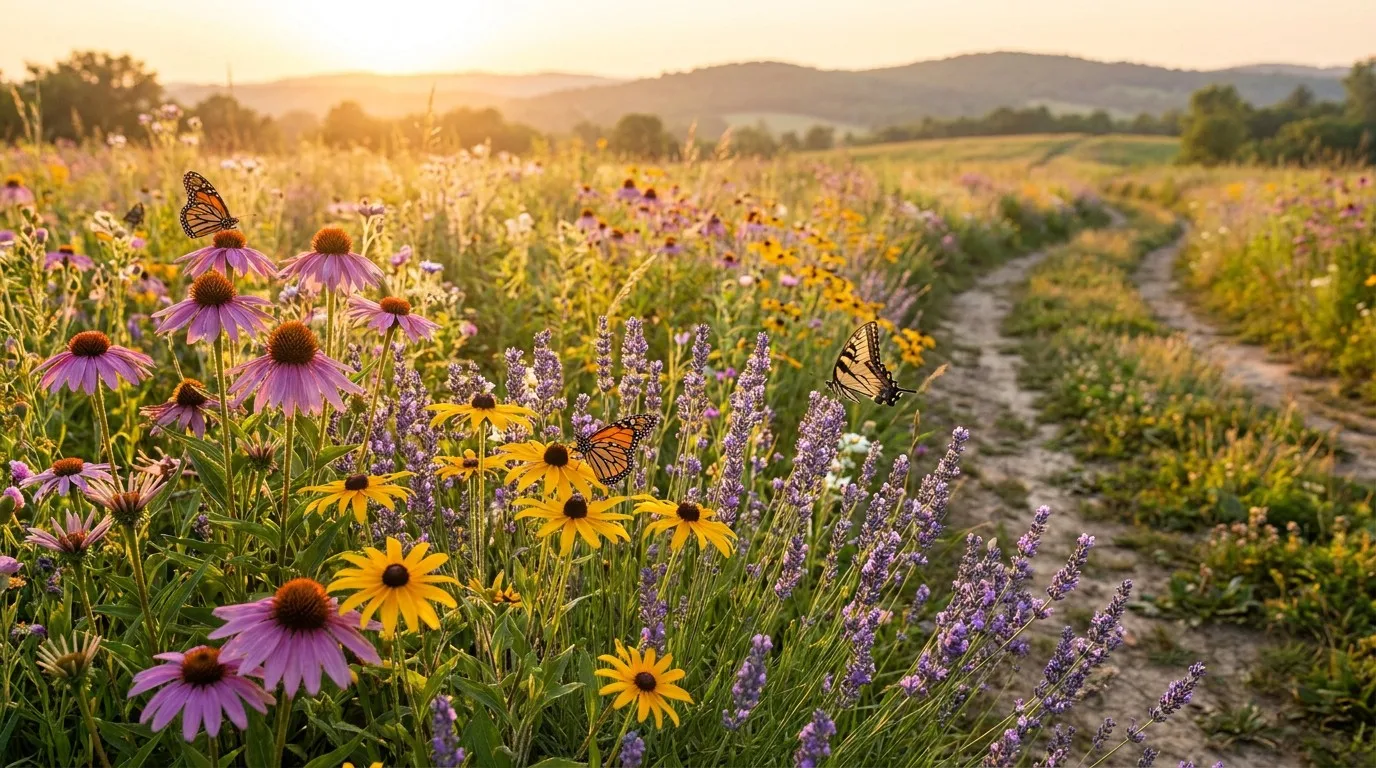
A wildflower meadow is the garden that practically takes care of itself. Once established, it requires almost no watering, minimal weeding, and zero deadheading — yet it produces months of continuous color, attracts pollinators in extraordinary numbers, and looks progressively better every year. Here's how to create one properly.
Why Wildflowers Outperform Traditional Flower Beds
Traditional flower beds are high-maintenance by design — annuals need replanting, perennials need dividing, and everything needs deadheading. A wildflower meadow works differently. The plants are adapted to your local conditions, support each other ecologically, and self-seed to fill gaps naturally. The result is lower input, higher biodiversity, and a beauty that increases with each season.
Choosing the Right Seed Mix
Not all wildflower mixes are equal. For best results:
- Choose regionally appropriate mixes — seeds adapted to your climate establish faster and survive longer
- Balance annuals and perennials — annuals (poppies, cornflowers, cosmos) flower in year one while perennials establish; perennials (echinacea, rudbeckia, salvia) take over from year two onward
- Include native species — native wildflowers support local pollinators far more effectively than ornamental varieties
- Avoid "instant meadow" mixes — these often contain a high proportion of annual grasses and aggressive species that crowd out desirable plants
High-value species to look for: Echinacea (coneflower), Rudbeckia (black-eyed susan), Agastache, Achillea (yarrow), Liatris, Monarda, native Salvia, Asclepias (milkweed).
Site Preparation: The Most Important Step
Wildflower seeds are tiny and need direct soil contact to germinate. They cannot compete with established weeds. Proper site preparation is the difference between a successful meadow and a weed patch.
- Remove all existing vegetation — smother with cardboard for 3 months, or spray with a non-selective herbicide if speed is essential
- Loosen the soil surface — rake to a fine tilth, 2-3 inches deep. Do not add compost — wildflowers prefer low-fertility soil
- Do not over-prepare — wildflowers are adapted to poor soil; rich, amended soil favors vigorous weeds over delicate wildflowers
Sowing
Best times: Early spring (March-April) or autumn (September-October). Autumn sowing mimics natural seed dispersal and often produces better germination.
Mix seeds with sand (4 parts sand to 1 part seed) to help distribute them evenly across the area. Sow at the rate specified on the packet — resist the temptation to sow more heavily, as overcrowding leads to disease. Rake lightly and water gently.
Year One: Managing Expectations
Year one looks rough. Annual species will flower, but the meadow won't look like the seed packet photo. Perennials spend year one establishing root systems — flowering comes in year two. Resist the urge to weed aggressively; learn to identify your wildflower seedlings (they typically have smoother, more regular leaves than most weeds).
Ongoing Maintenance: Less Than You Think
- Annual cut: Cut the entire meadow to 4-6 inches in late winter (February-March). Remove the cut material — leaving it on site enriches soil and encourages weeds
- No watering once established
- No fertilizing — ever
- Spot-weed aggressive weeds (thistles, dock, bindweed) in years one and two; established meadow plants suppress them naturally thereafter
A wildflower meadow is the garden's greatest long-term investment. It rewards patience with beauty, biodiversity, and freedom from the tyranny of routine maintenance.
Find seeds and starter kits to begin your wildflower journey at vyrgromm.com.