
How to Beat the Summer Heat: Protecting Your Garden in Hot Weather
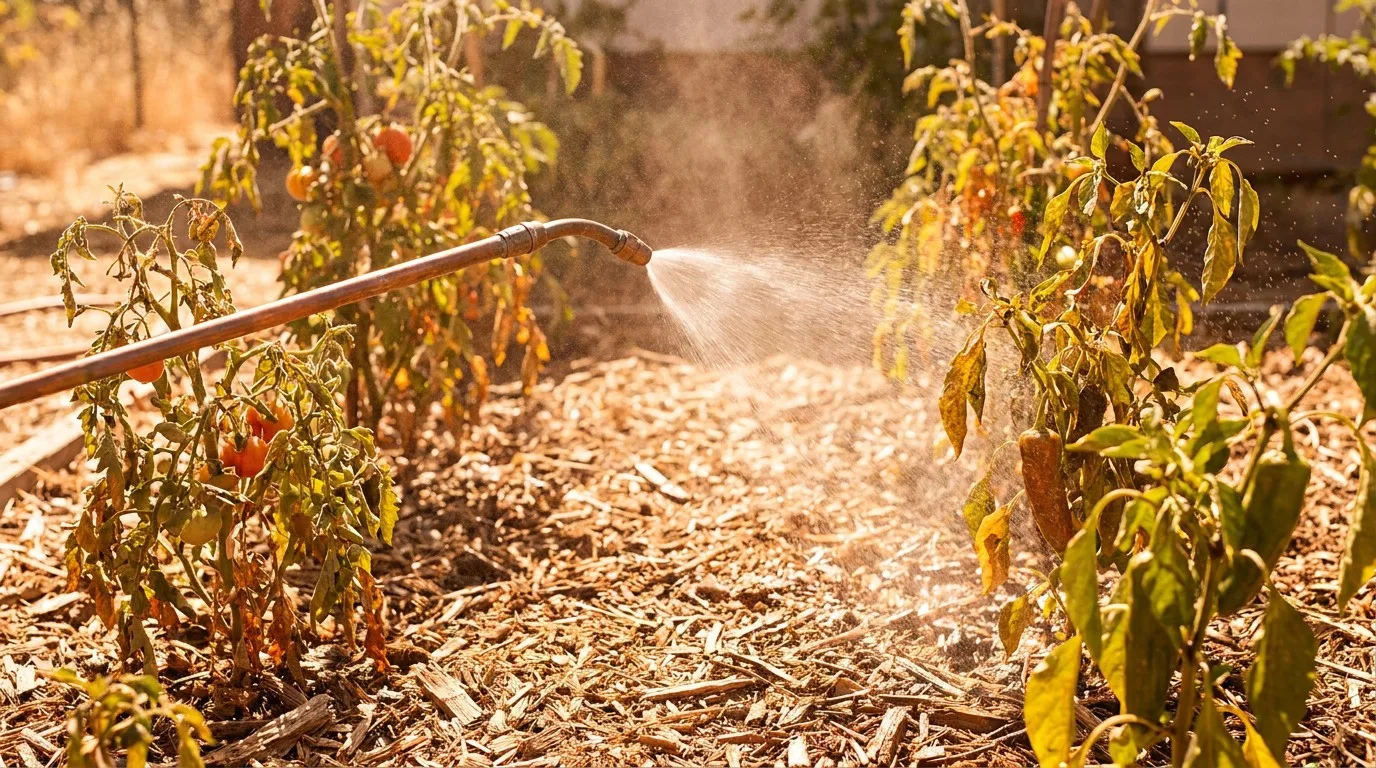
A heat wave can undo weeks of careful gardening in 48 hours. Wilted tomatoes, scorched lettuce, stressed perennials — summer heat is the most damaging force most home gardens face. But with the right preparation and a few strategic interventions, you can keep your garden thriving through even the hottest stretches of the year.
Understand Heat Stress vs. Drought Stress
These look similar — both cause wilting — but have different causes and solutions. Heat stress happens when air temperature exceeds a plant's tolerance, causing it to close leaf pores to conserve moisture (wilting even in moist soil). Drought stress is simple water deficit. Check soil moisture at 2 inches depth: if it's moist but the plant is wilting, it's heat stress — more water won't help. Provide shade instead.
Water Strategy for Hot Weather
Early morning, deeply
Water before 9 AM, delivering 1–2 inches per session, deep enough to reach roots. Deep watering in the cool of morning gives plants a full reservoir before heat builds. Watering during midday is largely wasted to evaporation; evening watering is acceptable but raises disease risk from overnight wet foliage.
Target roots, not leaves
Water at soil level using a watering wand to direct flow to the base of plants. Wet leaves in heat become scorched. Our 360° Copper Telescopic Spray Wand delivers a gentle, adjustable flow right to the root zone — precise, efficient, and easy on plant tissue.
Increase frequency, not volume
During extreme heat (above 95°F/35°C), containers may need watering twice daily. Ground-planted vegetables in full sun will need 50% more water than usual. Check soil daily and water whenever the top 2 inches are dry.
Mulch: Your Single Best Heat Defense
A 3–4 inch layer of organic mulch around plants reduces soil temperature by up to 15°F, cuts evaporation by 50%, and prevents the surface crusting that blocks water absorption. Apply now if you haven't — wood chips, straw, or shredded leaves all work. Keep mulch 2 inches away from plant stems to prevent rot.
Provide Shade for Vulnerable Plants
Lettuce, spinach, cilantro, and other cool-season crops bolt (go to seed prematurely) in temperatures above 80°F. Shade cloth rated at 30–40% light reduction dramatically extends the productive life of these crops through summer. Drape it over a simple frame of bamboo stakes above the bed. Even a beach umbrella positioned strategically buys a few more weeks of harvest.
Recognize When Not to Intervene
Some midday wilting in heat is normal and self-correcting. Tomatoes, sunflowers, and squash often droop dramatically at 2 PM and recover completely by evening. If they've recovered by morning, they're fine. Only intervene if plants are still wilted in the cool of morning — that indicates actual drought stress requiring water.
After a Heat Wave: Recovery Protocol
- Water deeply immediately — even if soil isn't fully dry
- Remove any crispy, dead foliage with clean pruning shears
- Don't fertilize for 1–2 weeks — stressed plants can't process nutrients and fertilizing heat-stressed plants can cause burn
- Watch for secondary pest infestations — heat-stressed plants release chemical signals that attract aphids and spider mites
With the right tools and a proactive approach, your garden can handle whatever summer throws at it. Browse our watering tools at vyrgromm.com — designed for precision, efficiency, and lasting quality.