
Garden Tool Maintenance 101: How to Clean, Sharpen & Store Your Tools
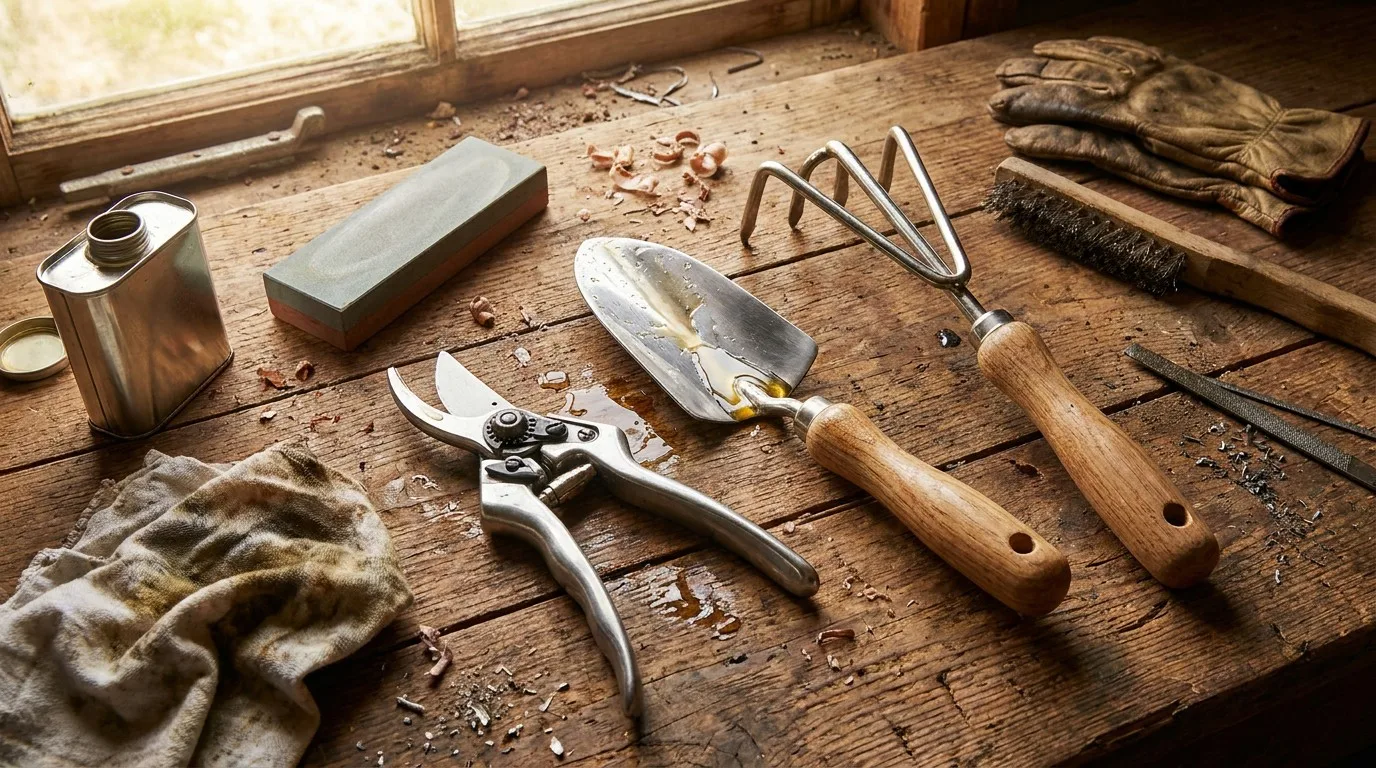
A quality garden tool is an investment. A $60 pair of pruning shears, properly maintained, will outlast five pairs of $15 replacements. Yet most gardeners leave their tools caked with soil, unsharpened, and stored in damp conditions — then wonder why they need to replace them every season. Here's the complete guide to getting decades of performance from your garden tools.
Why Maintenance Matters Beyond Longevity
Sharp, clean tools don't just last longer — they work better. A sharp blade makes cleaner cuts that heal faster and resist disease. A clean blade doesn't transfer soil-borne pathogens from plant to plant. A well-maintained tool is also safer — more force is required for a dull blade, making slips more likely.
After Every Use: The 5-Minute Routine
- Remove soil: Brush off loose soil with a stiff brush. For caked-on soil, use a wooden or plastic scraper — metal on metal can scratch protective coatings.
- Wipe blades: For pruning shears and any cutting tool, wipe blades with a cloth dampened with rubbing alcohol or a 10% bleach solution. This kills plant pathogens — especially critical if you've been cutting diseased material.
- Dry thoroughly: Never store wet tools. Moisture is the primary cause of rust. Wipe dry with a clean cloth.
- Light oil: A quick wipe of mineral oil, linseed oil, or WD-40 on metal surfaces prevents oxidation. One drop of lightweight oil on the pivot point of pruning shears keeps the action smooth.
- Store properly: Hang tools on hooks or store blade-down in a bucket of dry sand. Never pile tools in a damp corner.
Monthly: Sharpening
Pruning shears, trowels, hoes, and spades all benefit from monthly sharpening. Here's how to sharpen bypass pruning shears — the most common tool needing attention:
- Disassemble the shears if possible (remove the central bolt)
- Identify the beveled edge — only this side is sharpened
- Hold a diamond file or whetstone at the original bevel angle (typically 20–25°)
- Stroke from the base of the blade to the tip in one smooth motion, 5–8 times
- Remove the burr from the flat side with a single flat stroke
- Reassemble and test on paper — a sharp blade cuts cleanly without tearing
For hoes and spades, a mill file at 25–30° along the cutting edge restores a working edge in 3–4 strokes per section.
Seasonal: Deep Clean and Inspection
At the end of each growing season (or twice a year), do a full inspection:
- Check for rust: Light rust removes easily with steel wool and oil; heavy rust may require a rust-removing solution. Sand down to bare metal and re-oil.
- Inspect handles: Wooden handles should be sanded smooth if splintering and treated with linseed oil. Cracked handles on heavy tools are a safety hazard — replace them.
- Check hardware: Replace worn pivot bolts, springs, and locking mechanisms on pruning shears. Quality shears like our Bypass Pruning Shears 130T have replaceable parts available.
- Sharpen everything: Do a thorough sharpening of all cutting tools before long-term storage.
Winter Storage
Before storing for winter:
- Clean and oil all metal surfaces
- Lock pruning shears closed to maintain spring tension
- Store in a dry location — a garage or shed with ventilation, never a damp basement or outdoor bin
- Hang tools vertically or lay flat — standing in a bucket of dry sand coated with oil is traditional and effective
The 5 minutes you spend after each use is an investment that pays back many times over in tools that perform like new for years. Browse our professional-grade tools at vyrgromm.com — built from materials that reward maintenance with decades of reliable service.