
Container Gardening 101: How to Grow a Beautiful Balcony Garden
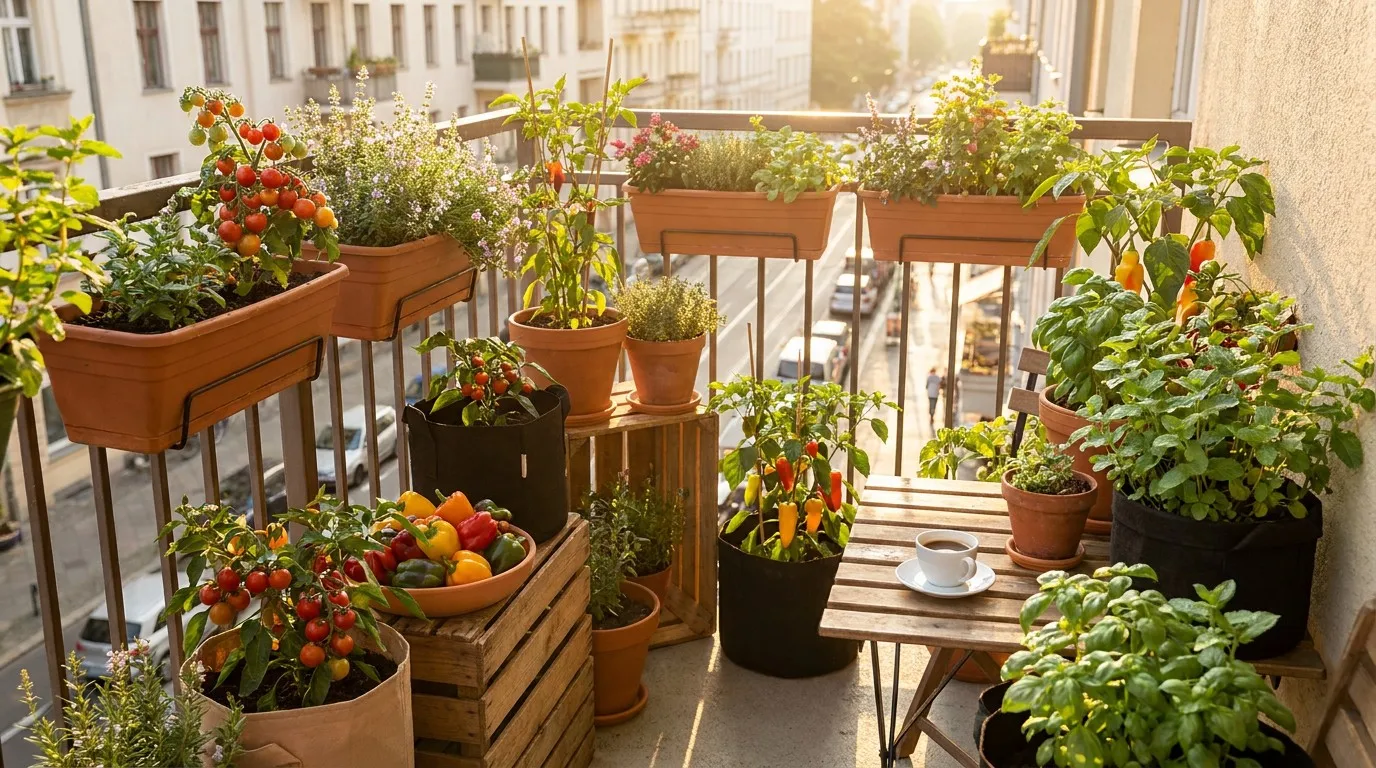
You don't need a yard to grow food. A balcony, a windowsill, even a fire escape can become a productive, beautiful garden with the right approach. Container gardening is one of the fastest-growing segments of home horticulture — and for good reason. Here's everything you need to start.
Why Container Gardening Works
Containers give you control that in-ground gardening never can. You choose the soil, the drainage, the location. You can move plants to follow the sun, bring them indoors before frost, and expand your growing space incrementally. It's also forgiving: if something goes wrong in one container, it doesn't affect your entire garden.
Choosing Your Containers
Material matters more than aesthetics:
- Terracotta: breathable, prevents root rot, dries out quickly — great for succulents and Mediterranean herbs
- Plastic: retains moisture longer, lightweight, affordable — ideal for water-hungry vegetables
- Fabric grow bags: excellent drainage and air pruning of roots — exceptional for tomatoes and peppers
- Ceramic/glazed: beautiful and moisture-retentive, but heavy — best for permanent perennials
Minimum sizes: herbs need 6-inch pots; lettuces 8 inches; tomatoes and peppers need at least 12-inch containers (5 gallons). Bigger is always better for vegetables.
The Best Vegetables for Balcony Containers
- Cherry tomatoes — compact varieties like 'Tumbling Tom' or 'Sweet 100' produce abundantly in 12-inch pots
- Peppers — heat-lovers that thrive in containers; one plant per 12-inch pot
- Lettuce and salad greens — shallow-rooted, fast-growing, harvest in 4 weeks
- Radishes — ready in 3 weeks, perfect for small spaces
- Herbs (basil, chives, parsley) — compact, productive, and useful daily
- Dwarf beans — bush varieties don't need staking and produce well in 10-inch pots
Soil: Never Use Garden Soil
Garden soil compacts in containers, suffocates roots, and drains poorly. Always use a quality potting mix — lighter, fluffier, and formulated for container drainage. For moisture retention, add coconut coir. For drainage, add 20% perlite to the mix.
Watering Container Gardens
Containers dry out 2-3 times faster than ground soil — especially in summer heat. Check daily by pushing your finger 2 inches into the soil. If dry, water thoroughly until it drains from the bottom. Morning watering is best. Consider self-watering containers for plants that need consistent moisture.
Feeding Your Container Garden
Nutrients wash out every time you water. Feed container vegetables with a balanced liquid fertilizer every 2 weeks during the growing season. Heavy producers like tomatoes and peppers benefit from a potassium-rich feed once they start flowering.
Maximizing Small Spaces
- Grow vertically — climbing beans, cucumbers, and small squash use height rather than floor space
- Stack heights — tall tomatoes behind, compact herbs in front
- Use railing planters and wall-mounted pockets
- Plant in succession — as one crop finishes, replant the same container immediately
A well-planned balcony garden can produce more food per square foot than most traditional gardens. Start with two or three containers, learn what works in your specific light conditions, and expand from there.
Explore our range of compact garden tools at vyrgromm.com — designed for small-space and balcony gardeners.