
7 Signs Your Soil Needs Help (And How to Fix It)
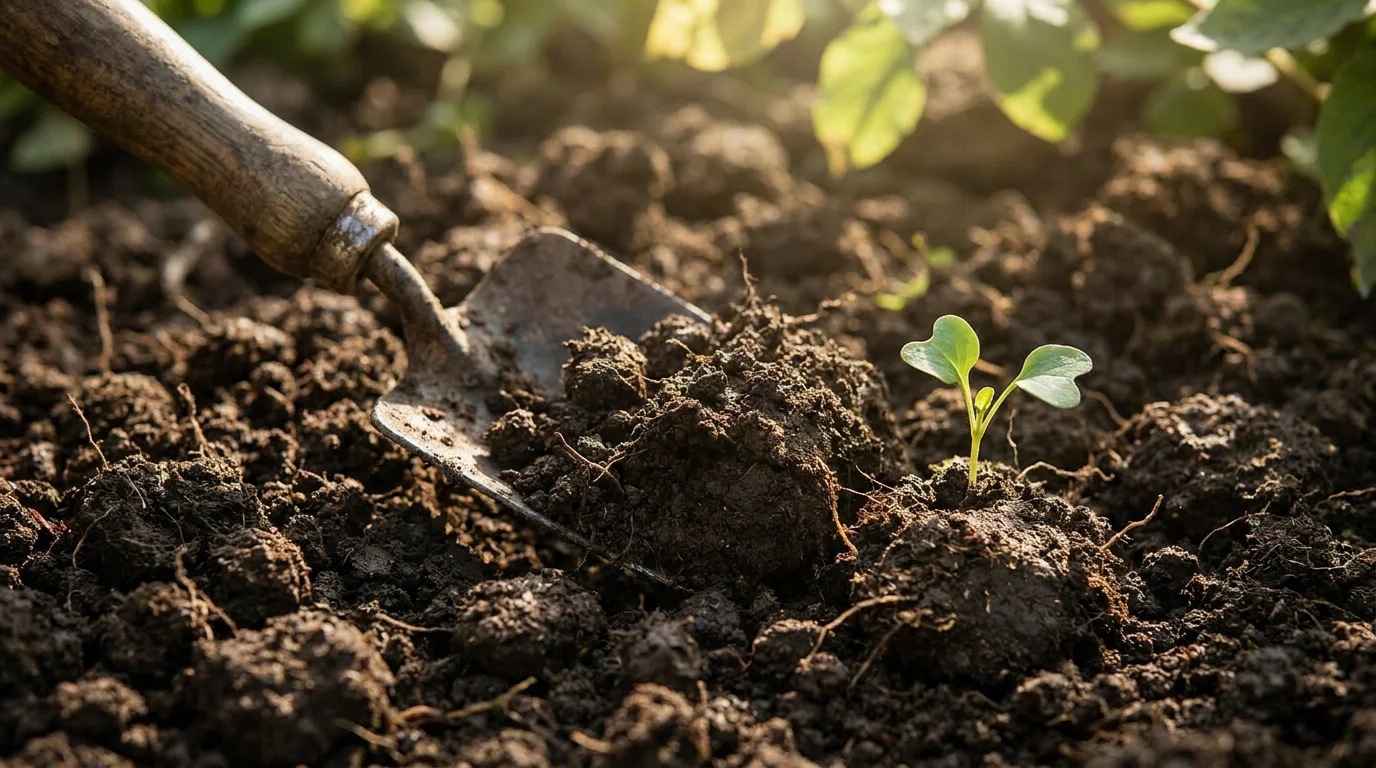
Healthy soil is the foundation of a thriving garden. Yet most gardeners focus on plants, fertilizers, and watering — while ignoring the medium those plants live in. Here are 7 clear warning signs that your soil is struggling, and what to do about each one.
Sign 1: Water Pools on the Surface Instead of Absorbing
What it means: Compacted soil or heavy clay content. Water can't penetrate, roots suffocate, and plants drown even when they look dry on top.
Fix: Aerate with a garden fork, working 12 inches deep. Incorporate organic matter — compost, aged bark, or perlite — to open up the structure. Avoid walking on garden beds, which compacts soil further.
Sign 2: Plants Are Stunted Despite Regular Watering & Fertilizing
What it means: pH imbalance. Most vegetables and flowers thrive at pH 6.0–7.0. Outside that range, nutrients become chemically locked and unavailable — no matter how much fertilizer you add.
Fix: Test your soil pH (kits are inexpensive and widely available). Add garden lime to raise pH, or sulfur to lower it. Retest after 4–6 weeks.
Sign 3: You Never See Earthworms
What it means: Low organic matter and poor biological activity. Earthworms are nature's best soil engineers — their tunnels aerate soil and their castings are incredibly nutrient-dense. No worms = dead soil.
Fix: Add 2–3 inches of compost to the surface and work it in. Worms will follow the food. Avoid synthetic pesticides and herbicides that kill soil biology.
Sign 4: Soil Is Hard and Crusty After Rain
What it means: Low organic matter and poor structure. A hard surface crust prevents water infiltration and makes it impossible for seedlings to push through.
Fix: Mulch! A 2–3 inch layer of organic mulch (straw, wood chips, shredded leaves) keeps soil moist, prevents crusting, and breaks down to feed biology over time.
Sign 5: Yellow Leaves Across Multiple Plant Types
What it means: Likely nitrogen deficiency, or a pH problem preventing nitrogen uptake. Nitrogen deficiency shows as yellowing that starts at the oldest (bottom) leaves and moves upward.
Fix: Apply a balanced slow-release fertilizer. For a quick fix, water with a diluted liquid fertilizer — plants can absorb it through both roots and leaves. Then address underlying pH if the problem persists.
Sign 6: Soil Smells Sour or Like Rotten Eggs
What it means: Anaerobic conditions — waterlogged soil has driven out oxygen, and anaerobic bacteria are producing sulfur compounds. This is toxic to plant roots.
Fix: Improve drainage immediately. Raise beds, add grit or coarse sand, and reduce watering. Let the soil dry out partially before replanting.
Sign 7: Nothing Seems to Decompose
What it means: Low microbial activity. If you add compost or organic matter and it just sits there, your soil biology is depleted — often from over-reliance on synthetic fertilizers that bypass and eventually kill microbial communities.
Fix: Add microbially-active compost (not sterilized potting mix). Consider inoculating with mycorrhizal fungi, which dramatically improve nutrient uptake and root health.
The Golden Rule of Soil Health
Feed the soil, not just the plant. Healthy soil feeds itself through a complex web of bacteria, fungi, earthworms, and other organisms. Your job is to provide organic matter, avoid compaction, maintain pH, and let biology do the rest.
Good soil doesn't happen overnight — but with consistent attention, you can transform even the most depleted plot into a thriving, productive garden within a single season.
Explore our premium organic potting mixes and soil amendments at Vyrgromm — formulated to support healthy soil biology from the ground up.