
Raised Beds vs. Ground Planting: Which Is Right for Your Garden?
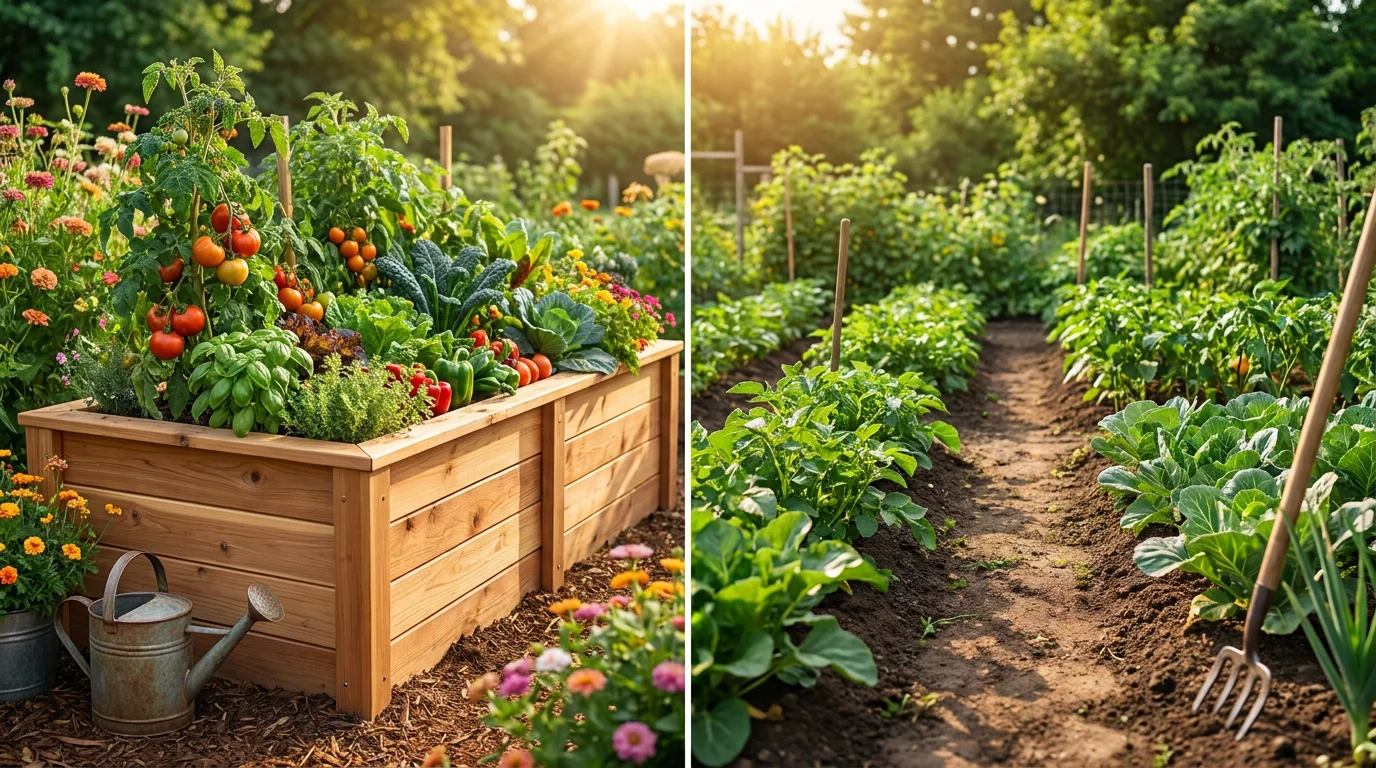
It's one of the most common questions new gardeners ask: should I build raised beds, or just plant in the ground? Both approaches work beautifully — but they suit different situations, soil conditions, budgets, and gardening goals. Here's a clear-eyed comparison to help you decide.
Raised Beds: The Case For
Complete soil control
You fill raised beds with exactly the soil mix you choose. If your native soil is clay-heavy, sandy, rocky, or contaminated — none of that matters. You start fresh with a custom blend optimized for what you're growing.
Better drainage
Raised beds drain freely, preventing the waterlogging that kills roots in poorly draining native soil. This is especially valuable in wet climates or low-lying areas.
Earlier planting in spring
Raised beds warm up faster than ground soil in spring — sometimes 2–4 weeks earlier. That's a significant advantage for getting a head start on tomatoes, peppers, and other warm-season crops.
Fewer weeds, better pest control
A well-built raised bed with landscape fabric underneath dramatically reduces weed pressure. The defined perimeter also makes it easier to add row covers or netting for pest protection.
Ergonomics
An 18–24 inch tall raised bed eliminates bending and kneeling. This is transformative for gardeners with back problems or limited mobility.
Raised Beds: The Case Against
- Upfront cost: Lumber, hardware, and quality soil fill add up quickly. A 4×8 foot cedar bed fully filled can cost $150–$300 to set up properly.
- Dries out faster: Raised beds need more frequent watering, especially in summer. The same drainage that's an advantage in wet conditions becomes a challenge in drought.
- Limited size: Large-scale planting — sprawling pumpkins, sweet corn, big potato rows — suits in-ground growing better.
In-Ground Planting: The Case For
Lower cost
If your soil is workable, in-ground gardening costs almost nothing to start. A bag of compost and some elbow grease is all you need.
Better for deep-rooted plants
Fruit trees, asparagus, artichokes, and other perennials with extensive root systems thrive in-ground, where they can explore freely in all directions.
Natural moisture retention
Ground soil stays moist longer, reducing watering frequency — a real advantage in hot, dry summers.
Unlimited scale
Want to grow 50 tomato plants? An entire market garden? In-ground is the only practical option at scale.
In-Ground Planting: The Case Against
- Soil quality varies wildly: You inherit whatever soil the site has — which may need significant amendment before it's productive.
- More weeds: Weed seeds already present in native soil will germinate continuously. Consistent mulching and cultivation are essential.
- Harder on the body: All that bending and kneeling adds up fast over a long growing season.
The Verdict: Which Should You Choose?
There's no universal right answer, but here's a practical framework:
- Choose raised beds if: your native soil is poor, you have drainage problems, you want to garden more ergonomically, or you're growing vegetables and herbs intensively in a small space.
- Choose in-ground if: you have good existing soil, you're planting at scale, you're establishing fruit trees or perennials, or you're working with a limited budget.
- Do both: Many experienced gardeners use raised beds for intensive vegetable production and in-ground planting for fruit trees, perennial flowers, and large-scale crops. The approaches complement each other beautifully.
Tools That Work for Both
Regardless of which method you choose, the right hand tools make every task faster and easier. A sharp trowel for transplanting, bypass shears for harvesting, and a quality watering wand for precise irrigation are essentials in any garden configuration.
Explore the full range of professional garden tools at vyrgromm.com — built for serious gardeners, priced for everyone.